
Following on from our webinar on The Gut:Skin Axis: From Emerging Evidence to Practical Recommendations, we’ve pulled together some of the key resources and references discussed within the webinar. If you missed the live webinar, you can register to watch the recording.
Studies and the Guidelines
Understanding the gut microbiome and gut-skin axis
Valdes AM, Walter J, Segal E, Spector TD. (2018). Role of the gut microbiota in nutrition and health. BMJ, 361, k2179. https://doi.org/10.1136/bmj.k2179
O’Neill CA, Monteleone G, McLaughlin JT, Paus R. (2016). The gut-skin axis in health and disease: A paradigm with therapeutic implications. BioEssays, 38(11), 1167–1176. https://doi.org/10.1002/bies.201600008
De Pessemier B, Grine L, Debaere M, Maes A, Paetzold B, Callewaert C. (2021). Gut–Skin Axis: Current Knowledge of the Interrelationship between Microbial Dysbiosis and Skin Conditions. Microorganisms, 9(2), 353. https://doi.org/10.3390/microorganisms9020353
Hillier RA, Gibson R, Maruthappu T, et al. Probiotics, Prebiotics, and Synbiotics as Oral Supplements for Skin Health, Function, and Disease Throughout the Life Course: A Scoping Review. Nutrition Reviews. https://doi.org/10.1093/nutrit/nuaf205
Diet and the gut microbiome
Wastyk HC, Fragiadakis GK, Perelman D, et al. (2021). Gut-microbiota-targeted diets modulate human immune status. Cell, 184(16), 4137–4153.e14. https://doi.org/10.1016/j.cell.2021.06.019
Acne and the gut-skin axis
Sánchez-Pellicer P, Navarro-Moratalla L, Núñez-Delegido E, et al. (2022). Acne, Microbiome, and Probiotics: The Gut–Skin Axis. Microorganisms, 10(7), 1303. https://doi.org/10.3390/microorganisms10071303
Eguren C, Navarro-Blasco A, Corral-Forteza M, et al. (2024). A Randomized Clinical Trial to Evaluate the Efficacy of an Oral Probiotic in Acne Vulgaris. Acta Dermato-Venereologica, 104, 33206. https://doi.org/10.2340/actadv.v104.33206Atopic dermatitis (eczema), the microbiome and probiotics
Fang Z, Li L, Zhang H, et al. (2021). Gut Microbiota, Probiotics, and Their Interactions in Prevention and Treatment of Atopic Dermatitis: A Review. Frontiers in Immunology, 12, 720393. https://doi.org/10.3389/fimmu.2021.720393
Fiocchi A, Pawankar R, Cuello-Garcia C, et al. (2015). World Allergy Organization-McMaster University Guidelines for Allergic Disease Prevention (GLAD-P): Probiotics. World Allergy Organization Journal, 8, 4. https://doi.org/10.1186/s40413-015-0055-2
Psoriasis, psoriatic arthritis and the gut microbiome
Myers B, Brownstone N, Reddy V, et al. (2019). The gut microbiome in psoriasis and psoriatic arthritis. Best Practice & Research Clinical Rheumatology, 33(6), 101494. https://doi.org/10.1016/j.berh.2020.101494
Zeng L, Yu G, Wu Y, Hao W, Chen H. (2021). The Effectiveness and Safety of Probiotic Supplements for Psoriasis: A Systematic Review and Meta-Analysis of Randomized Controlled Trials and Preclinical Trials. Journal of Immunology Research, 2021, 7552546. https://doi.org/10.1155/2021/7552546
Rosacea and the gut–skin axis
Sánchez-Pellicer P, Eguren-Michelena C, García-Gavín J, et al. (2024). Rosacea, microbiome and probiotics: the gut-skin axis. Frontiers in Microbiology, 14, 1323644. https://doi.org/10.3389/fmicb.2023.1323644
Skin ageing and the gut microbiome
Lee DE, Huh CS, Ra J, et al. (2015). Clinical Evidence of Effects of Lactobacillus plantarum HY7714 on Skin Aging: A Randomized, Double Blind, Placebo-Controlled Study. Journal of Microbiology and Biotechnology, 25(12), 2160–2168. https://doi.org/10.4014/jmb.1509.09021
Gao T, Wang X, Li Y, Ren F. (2023). The Role of Probiotics in Skin Health and Related Gut–Skin Axis: A Review. Nutrients, 15(14), 3123. https://doi.org/10.3390/nu15143123
Further reading
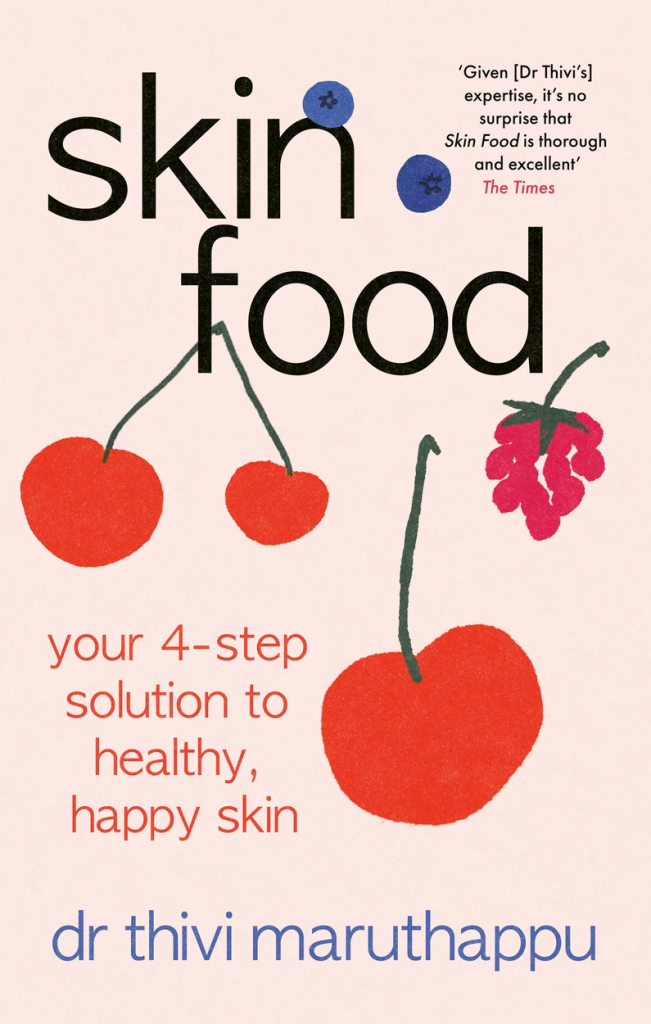
Maruthappu T. SkinFood: Your 4-Step Solution to Healthy, Happy Skin.
A practical, science-informed guide from Dr Thivi Maruthappu exploring nutrition, the mind-skin connection, skincare and medical treatment as part of a holistic approach to skin health. The book also includes recipes and guidance relating to acne, ageing, rosacea, psoriasis and eczema.
https://www.hachette.co.uk/titles/dr-thivi-maruthappu/skinfood/9780349432908/
Useful resources
King’s College London – Dermatology and Nutrition (Nutritional Dermatology)
Research exploring the relationship between diet, lifestyle and chronic inflammatory skin conditions, including psoriasis and acne.
https://www.kcl.ac.uk/research/dermatology-and-nutrition
Psoriasis UK (formerly the Psoriasis Association)
Information, advice and support for people affected by psoriasis and psoriatic arthritis, alongside funding and promotion of psoriasis research. The organisation shown as the Psoriasis Association on Thivi’s slide now uses the name Psoriasis UK.
https://psoriasisuk.org.uk/
British Skin Foundation
UK skin-health charity providing trusted information about skin conditions and supporting dermatology research.
https://www.britishskinfoundation.org.uk/
The APPLE Study – Asking People with Psoriasis about Lifestyle and Eating
A King’s College London research study investigating diet, lifestyle and psoriasis.
https://kclpure.kcl.ac.uk/portal/en/projects/the-apple-study-a-cross-sectional-observational-study-examining-t
APPLE Study findings – Psoriasis UK
A useful accessible summary of findings from the APPLE Study, including research examining diet quality and psoriasis severity.
https://psoriasisuk.org.uk/news/apple-study-findings
Speaker: Dr Thivi Maruthappu
Consultant Dermatologist & Visiting Lecturer, King’s College London and the Cleveland Clinic


Dr Thivi is the UK’s first dual qualified Consultant Dermatologist and Nutritionist and has pioneered the field of nutrition and skin health. Her work aims to bridge this gap, bringing evidence based nutrition to the management of skin conditions such as eczema, acne, rosacea and psoriasis.
Chair: Tiphaine Boulin
Registered Nutritionist, Senior Science Officer


Yakult Science for Health

About Yakult Science for Health
Yakult Science for Health are committed to promoting HCP knowledge of the gut microbiota, probiotics and gut health. The Yakult Company supports and funds independent medical and scientific research worldwide.
Science has always been at the heart of the Yakult company, since the microbiologist Dr Shirota selected and cultivated Lacticaseibacillus paracasei Shirota, in Japan in 1935.
For more information about free access to expert resources visit www.yakult.co.uk/hcp or contact the Science Team at science@yakult.co.uk.
Resources:
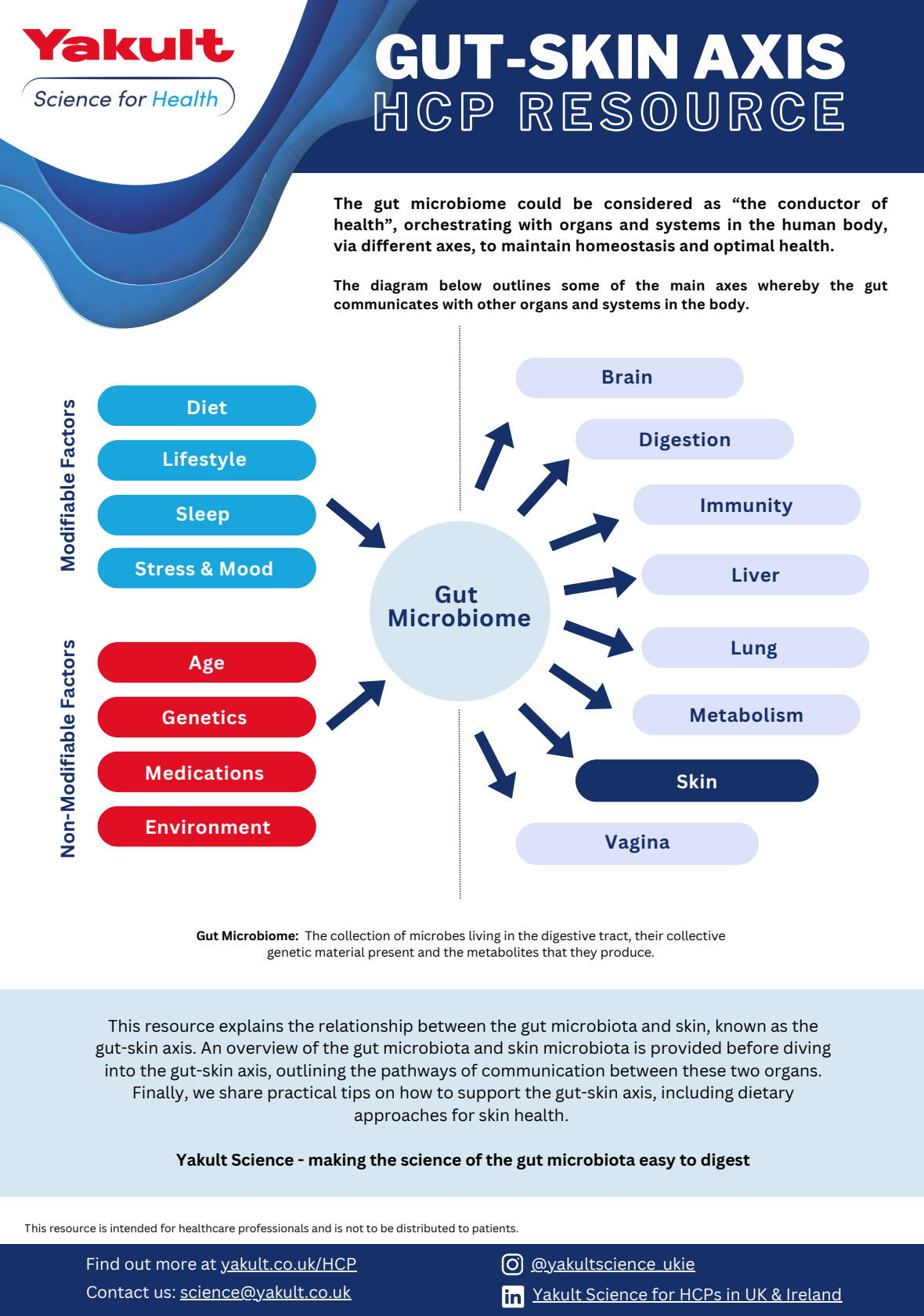
- Gut-Skin Axis HCP Resource: https://yakultsciencecouk.kinsta.cloud/wp-content/uploads/2026/08/Yakult-Science-Gut-Skin-Axis.pdf
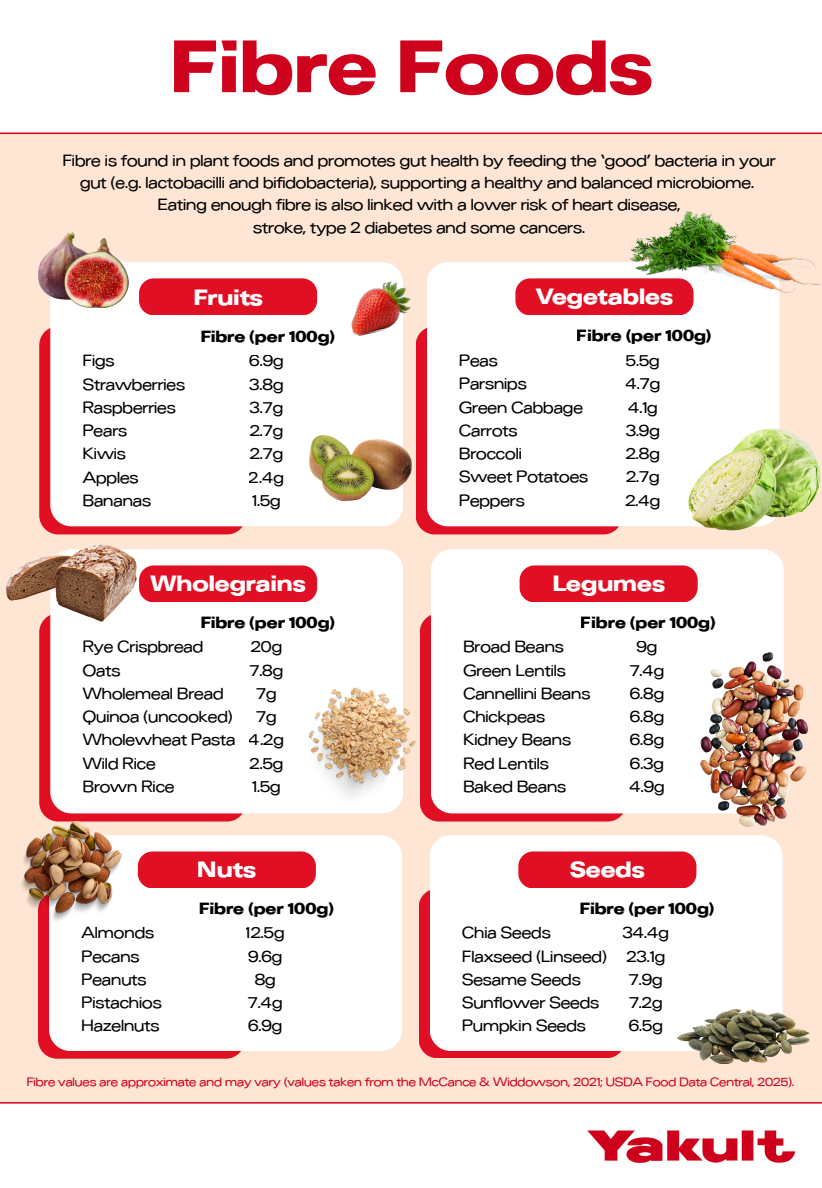
- Fibre Foods: https://yakultsciencecouk.kinsta.cloud/wp-content/uploads/2026/01/Yakult-Science-Fibre-Foods.pdf
- Newsletter: https://hcp.yakult.co.uk/newsletter/
BDA Gastroenterology Specialist Group

The Gastroenterology Group of the British Dietetic Association is a specialist group which is open for all BDA members with a keen interest in all things gastrointestinal. We support and develop high quality evidence based dietetic practice in Gastroenterology and Hepatology, through the channels of social media, event days and resources. All whilst, promoting the benefit of a dietitian’s role in this unique specialism.
Upcoming events:
Advancing Gastrointestinal Care: The Updated IBS and Coeliac Disease Guidelines
Face-to-face event exploring the updated IBS and coeliac disease guidelines.
23 October 2026
Find out more and register
Managing Gut Symptoms Without Fueling Disordered Eating
This webinar will explore the relationship between gastrointestinal symptoms and disordered eating, including how dietitians can recognise red flags and use practical, non-restrictive approaches to symptom management.
26 November 2026, 7:30–9:00pm
Find out more and register
Weight Management Medications – Joint Gastroenterology and Obesity Specialist Groups Webinar
A joint webinar from the BDA Gastroenterology and Obesity Specialist Groups focusing on weight management medications.
15 December 2026, 12:00–1:30pm
Further details and registration link coming soon.
Learn more about what the group are up to on X and Instagram.
YOU MAY ALSO BE INTERESTED IN:
The Gut-Brain Axis: More Than Just a Gut Feeling
Gut Microbiome Testing – Worth the Hype?
Why the Gut Microbiome Matters in Female Health


