
By Natalie Brabeen, Communications and Campaigns Officer for Action on Salt & Sugar
Free sugars remain a major contributor to poor health, increasing the risk of obesity, type 2 diabetes and tooth decay. Yet despite years of public health campaigns, dietary guidance and policy interventions, adults and children in the UK still consume around twice the recommended maximum amount of free sugars.
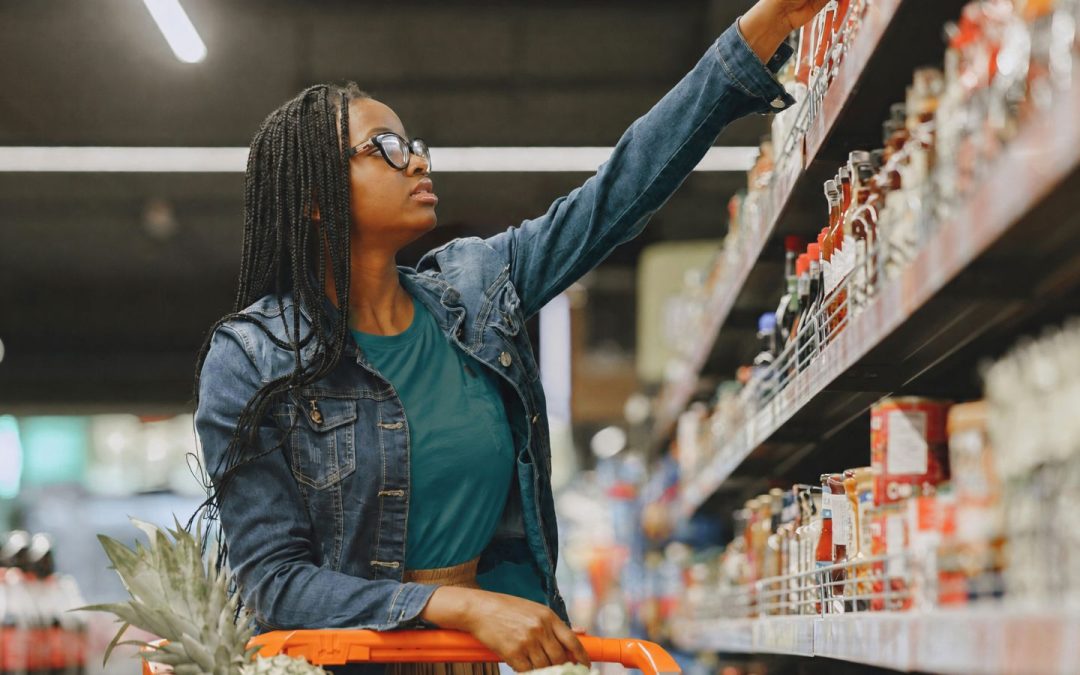
While food choices are often viewed as a matter of personal responsibility, the environments in which those choices are made play a central role in shaping behaviour. From product development and pricing promotions to advertising and store placement, food and drink companies influence what products are available, visible and affordable.
With this year’s Sugar Awareness Week focusing on industry accountability, we explore some of the strategies used by the food industry to influence what goes into our baskets – including how we as individuals can recognise it and how government can better hold industry accountable for health.
Influencing via packaging
Everything about a product’s packaging is designed to sell, influence and inform you, with 73% of UK shoppers reported to rely on packaging to aid their purchasing decisions.
Prominent nutrition claims such as “high protein”, “no added sugar”, or “all natural ingredients” can all promote a focus on one positive trait. This can encourage consumers to overestimate a product’s overall healthiness and unknowingly overlook its potentially less healthy composition – known as the ‘health halo’ effect. Research suggests this may also lead consumers to perceive products as suitable for more frequent or greater consumption.
In our 2025 Snack Bars Report, almost every bar featured a positive nutrition or marketing claim, yet 1 in 3 were high in sugar. Likewise, findings in the Food Foundation’s latest Broken Plate Report revealed that despite 99% of baby and toddler snacks featuring a nutrition or health claim, 74% of these contained high or medium levels of total sugars.
Child-appealing packaging, including colourful, eye-catching, playful imagery and recognisable cartoon characters, is designed to capture children’s attention and influence their preferences and purchasing requests. Importantly, it also encourages the idea that the product is wholly suitable for children, despite the fact it may contain high levels of sugars or other nutrients of concern.
Despite there being legal restrictions over what can-and-can’t be claimed, there are few laws in place that prevent excessive or misleading use of nutrition claims. There are also currently no rules preventing less-healthy foods from using child-appealing packaging, making this industry influence difficult to recognise and hard to escape.
Location-based marketing
The physical and online environment makes it incredibly easy to see and access less healthy foods. Wherever your location, high fat, salt and sugar (HFSS) food marketing will follow – featuring on the side of buses, billboards and street signs to keep the brand centre stage, or capitalising on high traffic areas in stores to encourage impulse buys. With online food ads prolific, exposure doesn’t require actively looking for it. Less healthy foods can appear while browsing social media, checking emails, in-app notifications or scrolling online content. Research shows that when exposed to both healthy and unhealthy social media food ads, teenagers will view the unhealthy ads for longer, share them with friends and recall the brands better.
The impact of location-based marketing is not experienced equally and has the potential to exacerbate already existing health inequalities. Evidence suggests that exposure to less healthy food advertising is often in more deprived communities, with one study finding junk food ads to appear six times more frequently per kilometre in the most deprived areas compared to the least.
Location-based marketing in all its forms has recently received some regulation from government, with the Junk Food Advertising Ban coming into place earlier this year and HFSS location-based restrictions in 2022. However, limited restrictions cover the outdoor advertising space and there are still frequent breaches by companies. Businesses continue to test the boundaries of the legislation via loopholes and workarounds – using in-aisle displays, floor stickers or in-store advertising screens to increase product visibility, or by advertising less healthy products that sit outside of the restrictions. As policies are introduced, businesses are fast to adapt, making their influence prevalent and difficult to ignore.
Discounts, coupons and price promotions
Discounts, loyalty rewards and special offers are all effective food marketing tools. Promotions create a sense of value and urgency, encouraging consumers to purchase products they may not otherwise have bought. Increasingly, these promotions are tailored using customer data collected through loyalty cards and online shopping behaviours, making them highly personalised and seemingly omnipresent.
In 2022 the government brought in restrictions around these very types of offers, aimed at reducing over-purchasing of HFSS foods and encouraging retailers to shift their promotional activity towards healthier products and staple foods.
This policy was delayed for years due to industry lobbying and is currently still limited to a set list of categories. This means some less healthy foods such as sausage rolls, processed meats and spreads can still feature price promotions, despite the well-documented fact that “buy one get one free” or loyalty card discounts have been shown to lead us to buy almost 20% more than we otherwise would.
Almost half of price promotions and 1 in 4 multibuys are on unhealthy food or drink, and in the current cost of living crisis, placing such appealing promotions onto less healthy foods, is not only a direct concern for public health, but as a consumer can feel exploitative and predatory.
Sports Sponsorship
Sport is synonymous with health, which makes it a powerful marketing agent for food and drink brands. By associating products with elite athletes, teams and major sporting events, companies can transfer these positive attributes to their brands, regardless of the nutritional quality of their products. This strategy, also known as ‘sportswashing’, can create a health halo around products that are high in fat, salt and sugar.
This pairing to health-harming products is by no means new – both the alcohol and tobacco industry have been doing it for years – but as a recent BMJ investigation found, there are now over 90 partnerships between British sports organisations, athletes and brands selling HFSS products. This year’s men’s football World Cup saw unhealthy food and drink account for 7 in 10 brand appearances and the value of the sports sponsorship market has boomed by 15% since 2019 to be worth a record £20 billion.
As restrictions on traditional advertising tighten, sports sponsorship remains a largely unregulated route through which HFSS brands can build trust and visibility. Whilst government have provided some acknowledgement of the issue sports sponsorship can create, this raises important questions about whether marketing practices that would be restricted elsewhere should continue to be permitted in sporting environments, particularly where children and young people make up a substantial share of the audience.
Celebrities, influencers and social media
Celebrity and influencer marketing has soared to become one of the most common and effective online advertising techniques.
Rather than relying solely on conventional advertising, brands are increasingly using influencers, content creators and their own social media channels to promote products in ways that are often perceived as authentic and relatable. Brands using influencer promotions have been shown to have a 30% higher conversion rate compared to those that do not as it encourages publicity for both the product and the brand itself. In using this style of marketing, commercial messages are often viewed more as opinion rather than formal advertising campaign, blurring the line and making junk food promotion harder to navigate.
The UK requires influencer marketing to be labelled as an ad, however studies show that although advertising disclosure increases advertising awareness, it does not protect children from the effects. In some cases, it can even increase the brand awareness and amplify intake of the marketed product.
A brand’s own social media can also work to influence HFSS exposure. In Bite Back’s Click-bait vs Children’s Health report, 71% of Instagram and 73% of TikTok food posts from the accounts of the top 10 out-of-home businesses featured a HFSS item. Crucially, 4 in every 5 posts featured themes, language or trends likely to appeal to young people and the accounts worked to build parasocial relationships with followers through giveaways, engagement and the development of a “brand personality”.
The regulatory framework around influencer marketing is complex and fragmented, and self-regulation on social media platforms is minimally applied. While recent restrictions on junk food marketing and social media may reduce some online exposure, enforcement remains challenging in digital environments where marketing is increasingly embedded in entertainment, influencer content and brand-led engagement. Policy frameworks have struggled to keep pace with these evolving marketing practices, leaving children and young people particularly vulnerable to HFSS food promotion.
Food choices are often framed as a matter of personal responsibility, but the reality is far more complex. Our food environment is carefully designed to shape what we notice, buy and consume, and the food industry has become highly skilled at influencing our behaviour – often in ways that are difficult to recognise and even harder to avoid. While becoming more aware of these influences can help consumers make better informed decisions, responsibility cannot rest solely with individuals. Creating a healthier food environment requires strong, evidence-based policies that close regulatory loopholes and ensure businesses are accountable for the impact their products have on public health.
Author bio:Natalie Brabben is the Communications and Campaigns Officer for Action on Salt & Sugar, based at Queen Mary University of London. She advocates for healthier food systems and translates nutritional research into public awareness and policy action.


